
Industrial Applications of Reverse Osmosis (RO) Systems
How industrial reverse osmosis systems work and where they are used — power generation, food and beverage, pharmaceuticals, electronics, chemical manufacturing and wastewater reuse — plus their advantages, limitations and future development.
Introduction
Water is one of the most important resources in modern industry. Many industrial processes require large quantities of high-quality water for production, cleaning, cooling, and other operations. However, natural water sources often contain dissolved salts, minerals, microorganisms, organic compounds, and other contaminants. Therefore, effective water treatment is essential for ensuring water quality and protecting industrial equipment.
Reverse osmosis (RO) is one of the most widely used membrane technologies for industrial water treatment. It is a pressure-driven separation process that uses a semi-permeable membrane to remove dissolved substances and impurities from water. RO systems can produce high-quality purified water and are used in many industries, including power generation, food and beverage, pharmaceuticals, electronics, chemical manufacturing, and wastewater treatment.
Principle of Reverse Osmosis
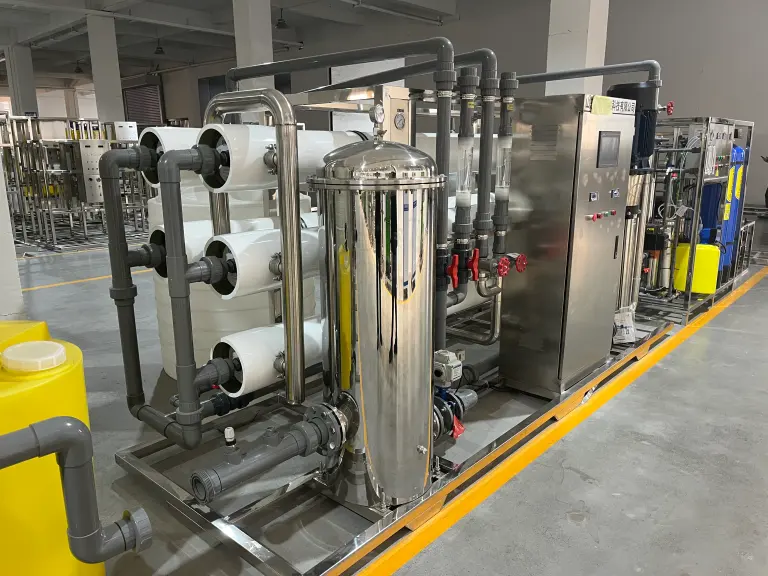
Reverse osmosis is based on the principle of osmosis. In natural osmosis, water moves through a semi-permeable membrane from a region with a lower concentration of dissolved substances to a region with a higher concentration. In an RO system, external pressure greater than the natural osmotic pressure is applied to the concentrated water. This forces water molecules through the membrane while most dissolved salts, minerals, microorganisms, and other contaminants are rejected.
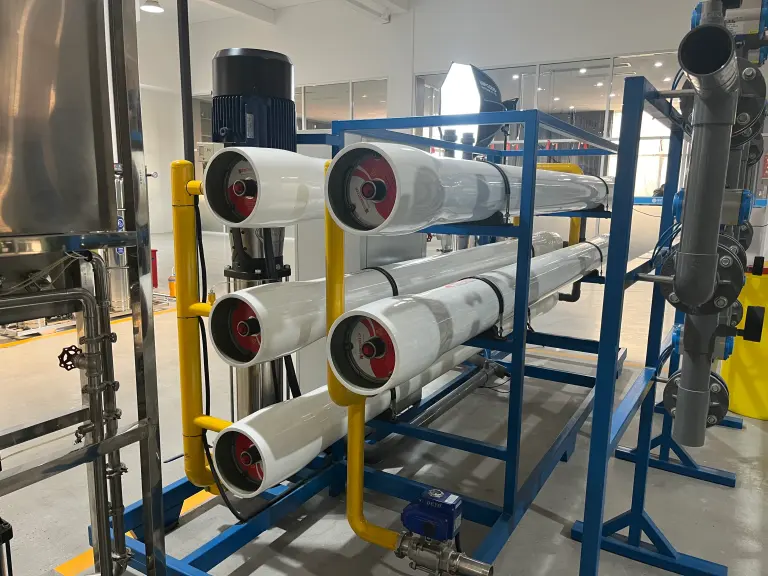
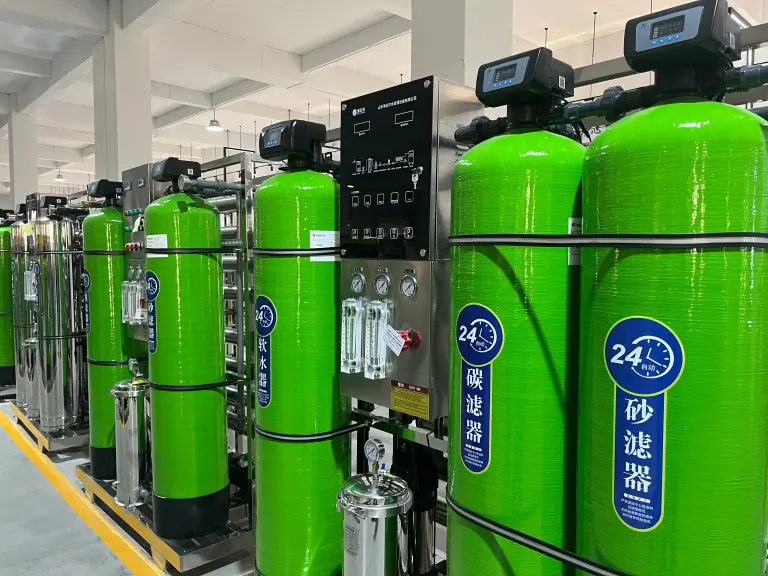
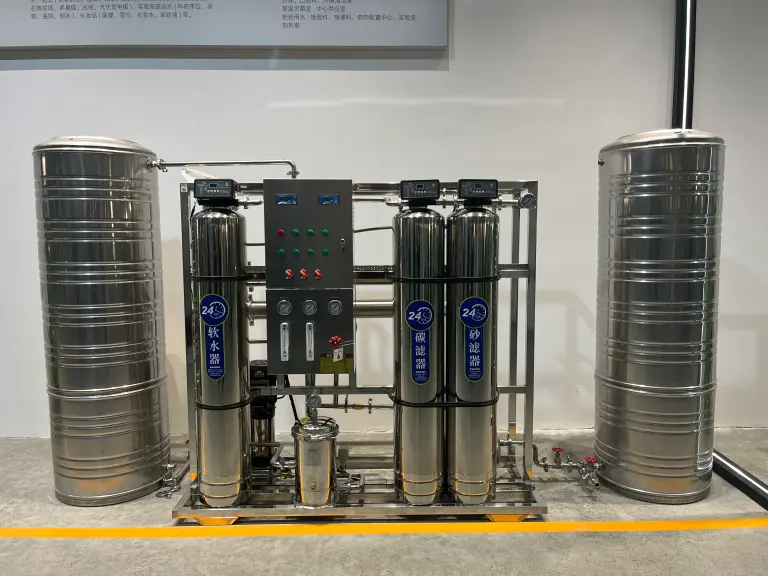
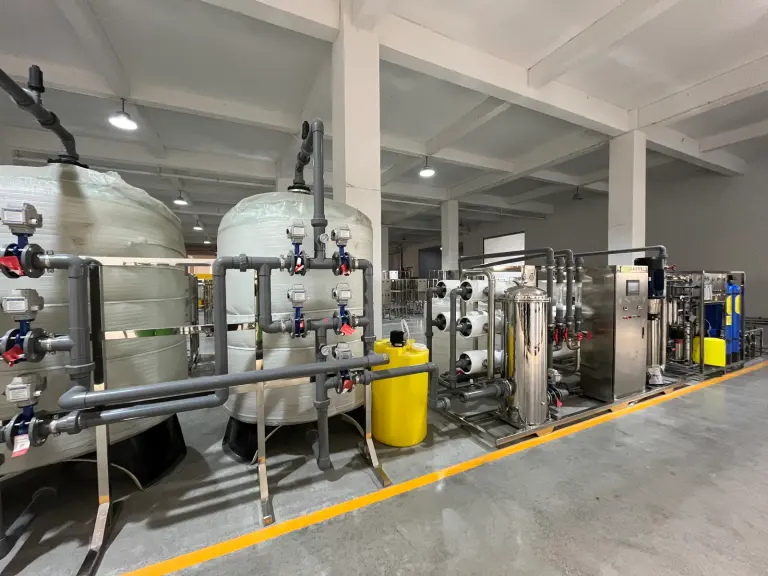
A typical industrial RO system consists of several major components, including pretreatment equipment, high-pressure pumps, RO membrane modules, pressure vessels, control systems, and post-treatment equipment. Pretreatment is particularly important because suspended solids, chlorine, and other substances can damage or reduce the performance of RO membranes.
The RO process normally produces two streams: permeate and concentrate. The permeate is the purified water that passes through the membrane, while the concentrate contains a higher concentration of rejected contaminants.
Applications in the Power Generation Industry
The power generation industry is one of the major users of industrial RO systems. High-quality water is required for boiler feedwater, cooling systems, and steam generation. If untreated water is used in boilers, dissolved minerals can accumulate on heat-transfer surfaces and form scale. This can reduce thermal efficiency and increase maintenance costs.
RO systems are commonly used to remove dissolved salts and other impurities from raw water before it enters a deionization or polishing system. By reducing the ionic load on downstream treatment equipment, RO can improve the overall efficiency of water treatment systems.
In power plants, RO technology is therefore an important part of the water purification process and helps maintain reliable operation of boilers and other equipment.
Applications in the Food and Beverage Industry
The food and beverage industry also uses RO systems extensively. Water is an important ingredient in many products, including bottled water, soft drinks, dairy products, and beverages. The quality of process water can directly affect the taste, appearance, safety, and consistency of the final product.
RO systems can remove unwanted dissolved minerals, salts, and other contaminants from water. They are used to produce purified water for beverage production, ingredient preparation, equipment cleaning, and other processes.
RO can also be used to concentrate certain liquid food products. By removing water while retaining larger molecules and valuable components, membrane technology can reduce the need for thermal processing. This can help preserve product quality and potentially reduce energy consumption.
Applications in the Pharmaceutical Industry
Water quality is especially important in pharmaceutical manufacturing because water is often used as a raw material, cleaning agent, and processing medium. Pharmaceutical facilities require water with very low levels of contaminants.
RO systems are frequently incorporated into pharmaceutical water treatment systems as a major purification step. RO can significantly reduce dissolved salts, microorganisms, organic substances, and other impurities. It is often combined with other technologies, such as ultraviolet treatment, electrodeionization, and final filtration, to achieve the required water quality.
The use of RO helps pharmaceutical manufacturers maintain consistent water quality and meet strict production and hygiene requirements.
Applications in the Electronics Industry
The electronics and semiconductor industries require extremely pure water during manufacturing. Even small amounts of dissolved ions or particles can affect sensitive electronic components and reduce product quality.
RO systems are commonly used as part of a multi-stage ultrapure water production system. RO removes a large proportion of dissolved contaminants before the water is treated by additional purification technologies.
For semiconductor manufacturing, high-purity water is used for processes such as wafer cleaning and rinsing. By providing effective initial purification, RO reduces the contaminant load on downstream equipment and helps improve the efficiency of the overall water treatment system.
Applications in Chemical Manufacturing
Chemical plants often require water with specific chemical characteristics. Water may be used as a raw material, solvent, cleaning agent, or part of a production process. The presence of unwanted minerals or dissolved substances can interfere with chemical reactions or affect the quality of the final product.
RO systems can provide treated water with controlled levels of dissolved solids. Depending on the application, RO can be used alone or combined with other treatment technologies. It is particularly useful when a plant needs to reduce total dissolved solids before further purification or chemical processing.
Applications in Industrial Wastewater Treatment
Another important application of RO is the treatment and reuse of industrial wastewater. Industrial processes can generate wastewater containing dissolved salts, metals, organic compounds, and other contaminants. Instead of discharging all wastewater, industries can treat and reuse part of it.
RO can separate many dissolved contaminants from treated wastewater and produce a relatively clean water stream suitable for reuse. For example, treated water may be reused for cooling towers, equipment cleaning, or other industrial applications.
Water reuse through RO can reduce freshwater consumption and wastewater discharge. This is especially important in regions where water resources are limited.
Advantages of Industrial RO Systems
RO technology has several advantages compared with conventional water treatment methods.
First, RO can remove a wide range of dissolved contaminants in a single membrane-based process. Second, it generally requires less chemical treatment than some conventional processes. Third, RO systems are modular and can be designed for different water treatment capacities.
Another important advantage is its role in water conservation. By treating and recycling industrial wastewater, RO systems can help companies reduce their dependence on freshwater sources.
In addition, RO can reduce the contaminant load on downstream purification systems. This can improve the performance and service life of technologies such as ion exchange and electrodeionization.
Challenges and Limitations
Despite its advantages, RO technology also has several limitations. One of the main challenges is membrane fouling. Suspended solids, microorganisms, organic compounds, and mineral deposits can accumulate on the membrane surface and reduce water production.
Pretreatment is therefore essential for maintaining stable RO performance. Depending on the source water, pretreatment may include filtration, activated carbon, water softening, antiscalant dosing, or other processes.
Another challenge is the production of concentrate. RO does not convert all feedwater into purified water. A portion of the feedwater becomes a concentrated waste stream containing the rejected contaminants. Industries must therefore develop appropriate methods for concentrate disposal or further treatment.
RO systems also require significant pressure, particularly when treating water with high concentrations of dissolved salts. This means that energy consumption and operating costs must be considered when designing an industrial RO system.
Future Development of RO Technology
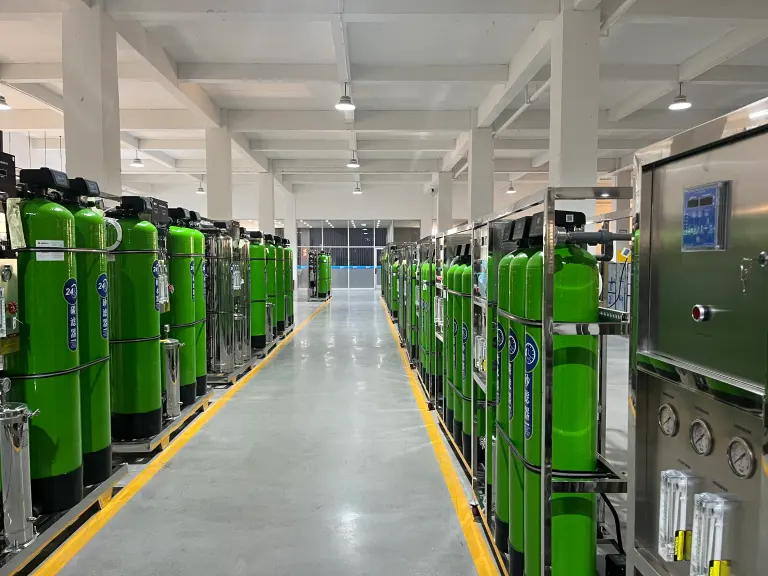
The development of RO technology is increasingly focused on improving energy efficiency, membrane performance, and system reliability. Modern membranes are designed to achieve high salt rejection while operating at lower pressures.
Energy recovery systems are also becoming increasingly important, particularly in large-scale desalination and industrial water treatment plants. These systems can recover energy from the high-pressure concentrate stream and reduce overall energy consumption.
In addition, automation and digital monitoring are improving RO system operation. Sensors and control systems can continuously monitor parameters such as pressure, flow rate, conductivity, and water quality. This allows operators to identify membrane fouling and other problems at an early stage.
Conclusion
Reverse osmosis is an important technology in modern industrial water treatment. Its ability to remove dissolved salts and many other contaminants makes it suitable for a wide range of applications. RO systems are widely used in power plants, food and beverage production, pharmaceutical manufacturing, electronics, chemical industries, and industrial wastewater reuse.
Although membrane fouling, energy consumption, and concentrate disposal remain important challenges, improvements in membrane materials, energy recovery, pretreatment, and automation are making RO systems increasingly efficient and reliable.
As industries face growing pressure to reduce water consumption and improve environmental sustainability, RO technology is likely to play an increasingly important role. By providing high-quality treated water and enabling industrial water reuse, reverse osmosis can contribute significantly to both industrial productivity and sustainable water management.
Need an engineered recommendation?
Send your feed-water analysis and operating target to our engineering team.
Chat on WhatsApp