
Industrial Applications of Reverse Osmosis in Seawater Desalination
How seawater reverse osmosis (SWRO) supplies industry — the principle behind it, pretreatment, industrial and power-plant water supply, coastal applications, energy consumption, membrane fouling and concentrate management.
Introduction
Freshwater is an essential resource for industrial development. However, many industrial areas are located in coastal or water-scarce regions where freshwater resources are limited. In these locations, seawater can provide an alternative source of water if dissolved salts and other impurities are removed.
Reverse osmosis (RO) has become an important technology for seawater desalination. Seawater reverse osmosis, commonly known as SWRO, uses high pressure and semi-permeable membranes to separate freshwater from seawater. The treated water can then be used for different industrial purposes.
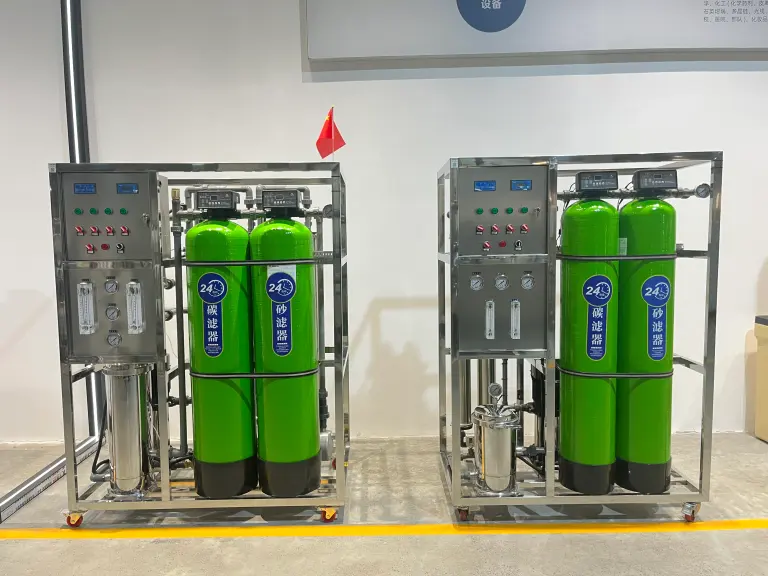
Principle of Seawater Reverse Osmosis
Seawater contains a high concentration of dissolved salts. In an SWRO system, seawater is first treated to remove suspended solids and other substances that could damage or foul the membranes.
After pretreatment, high-pressure pumps deliver the water to the RO membrane system. The applied pressure forces water molecules through the membrane while most dissolved salts remain in the concentrate stream.
Two main streams are produced. The first is permeate, which contains a much lower concentration of dissolved salts. The second is concentrate, which contains the rejected salts.
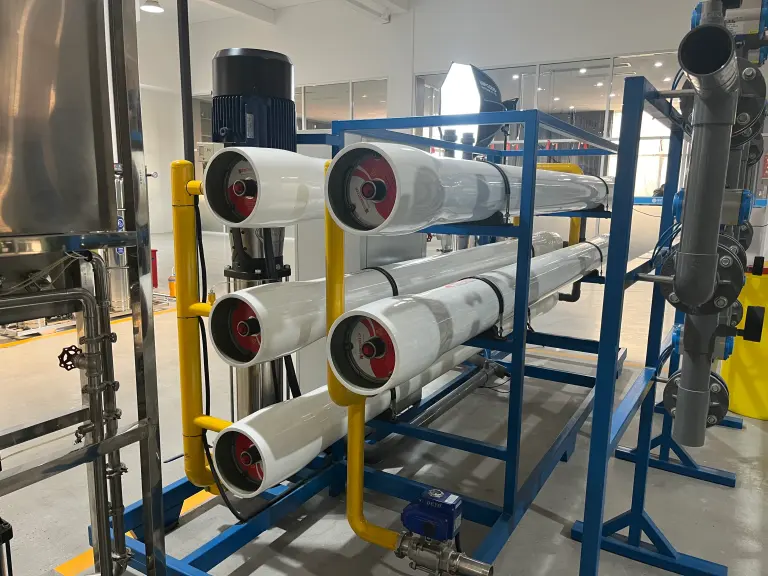
Importance of Pretreatment
Pretreatment is essential for reliable SWRO operation. Seawater may contain suspended particles, microorganisms, organic materials, and other contaminants.
If these substances enter the RO membrane system, they can cause fouling and reduce membrane performance. Pretreatment technologies may include screening, coagulation, media filtration, ultrafiltration, and cartridge filtration.
The choice of pretreatment depends on seawater quality and plant design. Good pretreatment can reduce membrane cleaning requirements and improve system reliability.
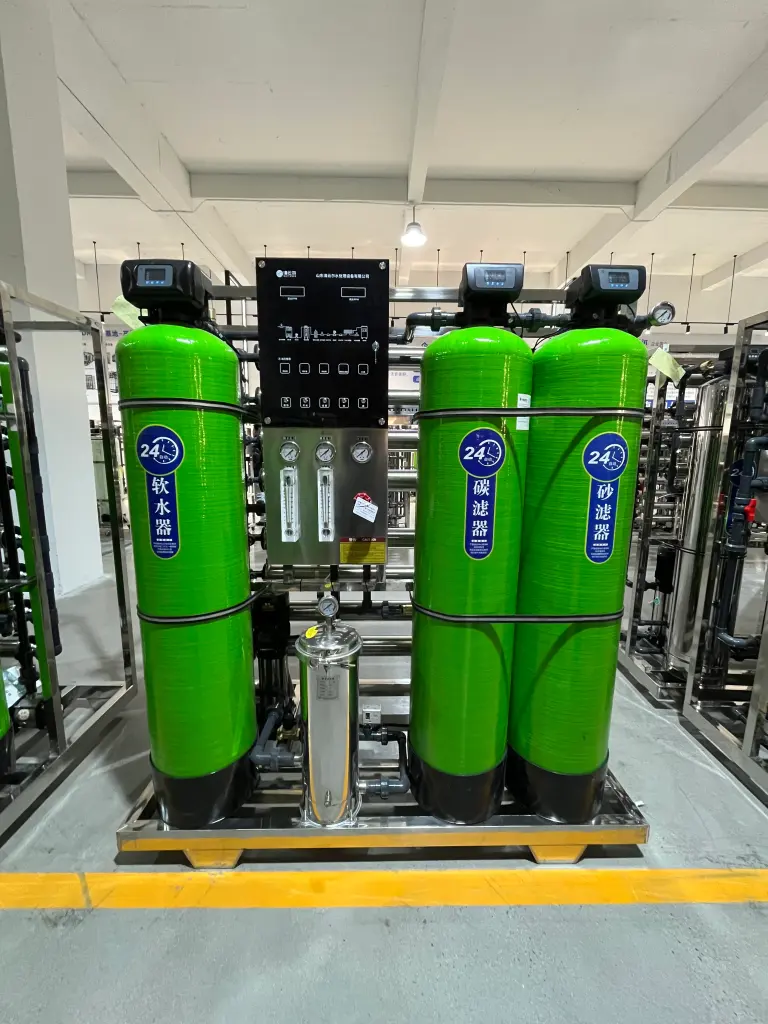
Industrial Water Supply
Desalinated seawater can be used as an industrial water source in locations where conventional freshwater is limited.
Industrial plants may use desalinated water for cooling, cleaning, process water, and steam production. Additional treatment can be added when a particular industrial process requires higher-purity water.
For example, RO permeate may receive further treatment before being used as boiler feedwater or in sensitive manufacturing processes.
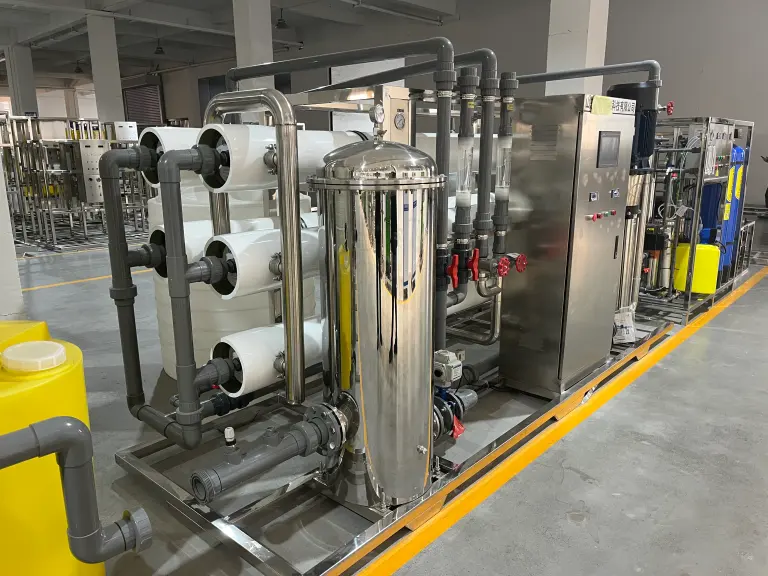
Applications in Power Plants
Power generation facilities located near coastal areas can use seawater as a source of industrial water.
After desalination, the water can be treated further for use in boilers and other systems. This reduces dependence on municipal or natural freshwater supplies.
RO desalination can therefore improve water security for power plants, especially in regions where freshwater availability is uncertain.
Applications in Coastal Industries
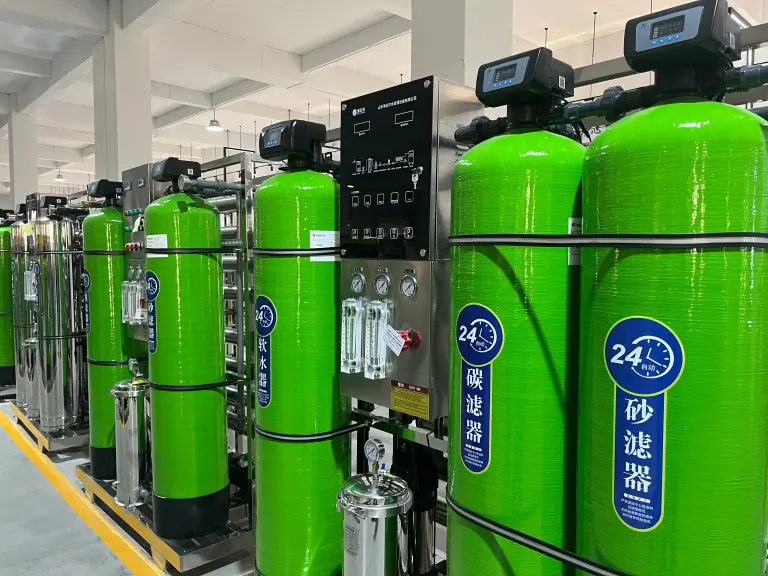
Many large industrial facilities are built near coastlines because of transportation, shipping, and infrastructure advantages. These facilities may include refineries, petrochemical plants, power stations, and manufacturing facilities.
Seawater is readily available in coastal locations. RO technology allows these industries to convert seawater into a useful water supply.
This can be particularly important when industrial expansion increases water demand beyond the capacity of local freshwater resources.
Energy Consumption
One of the main challenges of SWRO is energy consumption. Because seawater has a high salt concentration, relatively high pressure is required to overcome osmotic pressure and produce freshwater.
High-pressure pumps therefore represent a major part of the energy demand of an SWRO plant.
Modern desalination systems can use energy recovery devices to recover pressure energy from the concentrate stream. This recovered energy can reduce the total electricity required for desalination.
Membrane Fouling
Membrane fouling is another important challenge. Biological materials, suspended solids, and organic substances can accumulate on membrane surfaces.
Fouling can reduce water production and increase operating pressure. Regular monitoring, effective pretreatment, and appropriate membrane cleaning are necessary to maintain stable operation.
Operators should monitor pressure, flow, conductivity, and other important parameters to identify performance problems.
Concentrate Management
SWRO produces a concentrated saltwater stream that must be managed appropriately. The concentrate contains a higher salt concentration than the original seawater.
Industrial facilities must consider environmental requirements when designing concentrate discharge systems. The characteristics of the concentrate and the receiving environment are important factors in determining the appropriate management method.
Future Development
Future SWRO systems are expected to become more energy-efficient. Improvements in membrane materials, pumps, energy recovery equipment, and process control can reduce operating costs.
Renewable energy may also be integrated with desalination systems in some applications. Solar and other renewable energy sources could help reduce the carbon intensity associated with water production.
Conclusion
Seawater reverse osmosis is an important technology for providing water to industries in coastal and water-scarce regions. It can convert seawater into a useful source of process and utility water.
Although energy consumption, membrane fouling, and concentrate management remain important challenges, improvements in technology continue to increase the efficiency of SWRO systems.
As industrial water demand continues to grow, seawater desalination using reverse osmosis can provide an important alternative to conventional freshwater sources.
Need an engineered recommendation?
Send your feed-water analysis and operating target to our engineering team.
Chat on WhatsApp