
Improving Water Treatment Efficiency in Thermal Power Plants Using Reverse Osmosis
How RO improves water treatment in thermal power plants — boiler feedwater and cooling water treatment, lower chemical consumption, performance monitoring, maintenance and economics.
Introduction
Thermal power plants require large quantities of water for steam generation, cooling, and other operational processes. Water quality is particularly important because dissolved salts and minerals can cause scaling, corrosion, and equipment damage.
Reverse osmosis (RO) is widely used in industrial water treatment and can form an important part of power plant water purification systems.
By removing a large proportion of dissolved salts and other contaminants, RO helps produce water suitable for further treatment and use in power generation.
Water Requirements in Thermal Power Plants
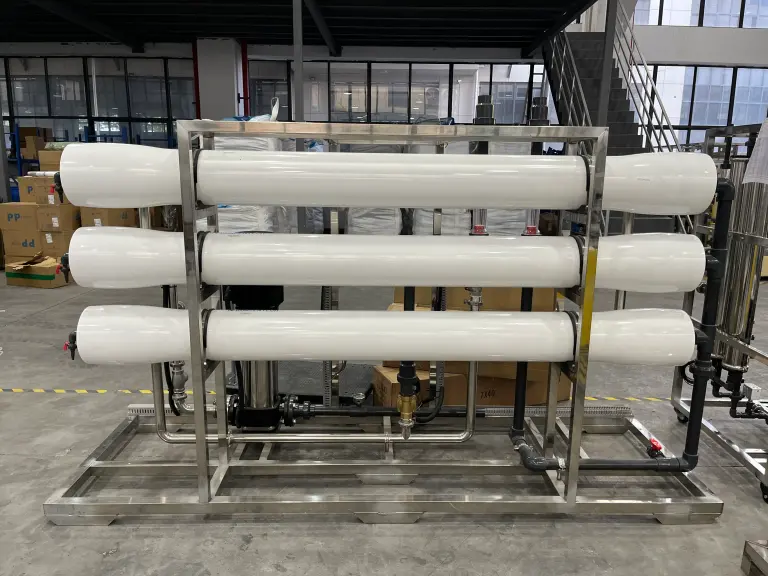
Water is used in several major areas of a thermal power plant, including boilers, steam turbines, cooling systems, and auxiliary equipment.
Different applications require different levels of water purity.
Boiler feedwater generally requires careful control of dissolved impurities, while cooling water treatment focuses on controlling scaling, corrosion, and biological growth.
RO can be incorporated into water treatment systems to support these requirements.
Boiler Feedwater Treatment
Boilers operate at high temperatures and pressures. Dissolved minerals in untreated water can form deposits on heat-transfer surfaces.
These deposits reduce heat-transfer efficiency and may contribute to equipment overheating.
RO removes a large proportion of dissolved salts before the water enters additional purification systems.
In many power plants, RO is followed by electrodeionization or ion exchange to achieve the required boiler feedwater quality.
Cooling Water Treatment
Cooling systems are another important water-consuming part of thermal power plants.
High mineral concentrations can cause scale formation in cooling towers and heat exchangers.
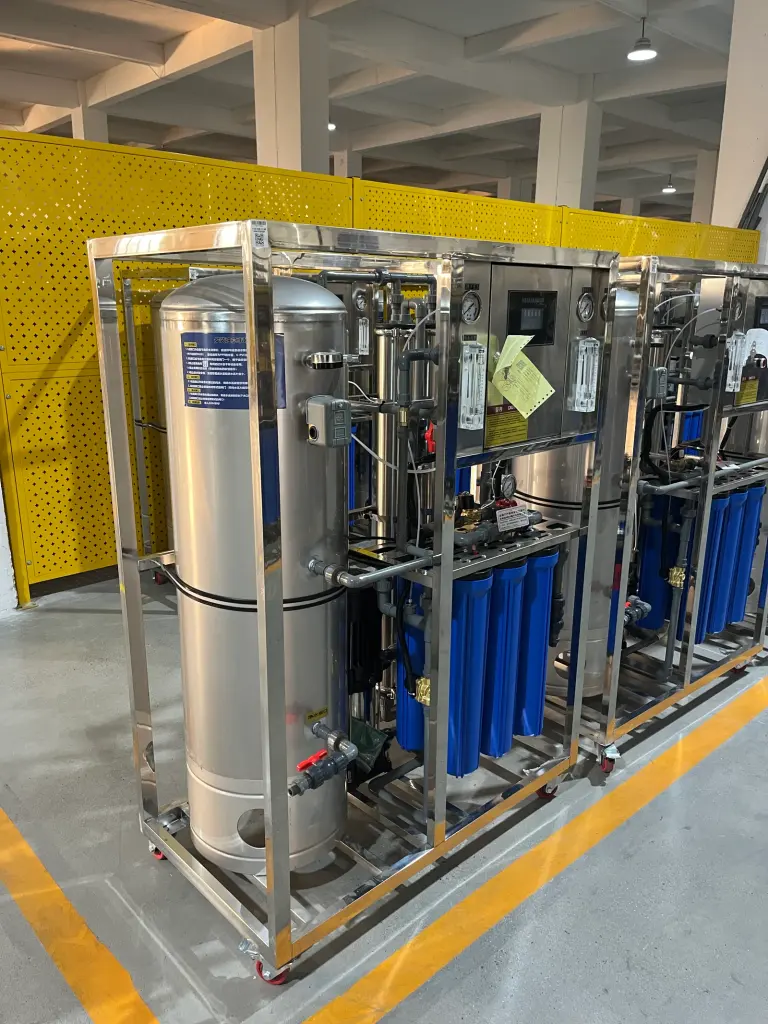
RO-treated water may be used as cooling system makeup water where lower dissolved solids are beneficial.
However, the overall cooling water chemistry must still be controlled to prevent corrosion and biological growth.
Reducing Chemical Consumption
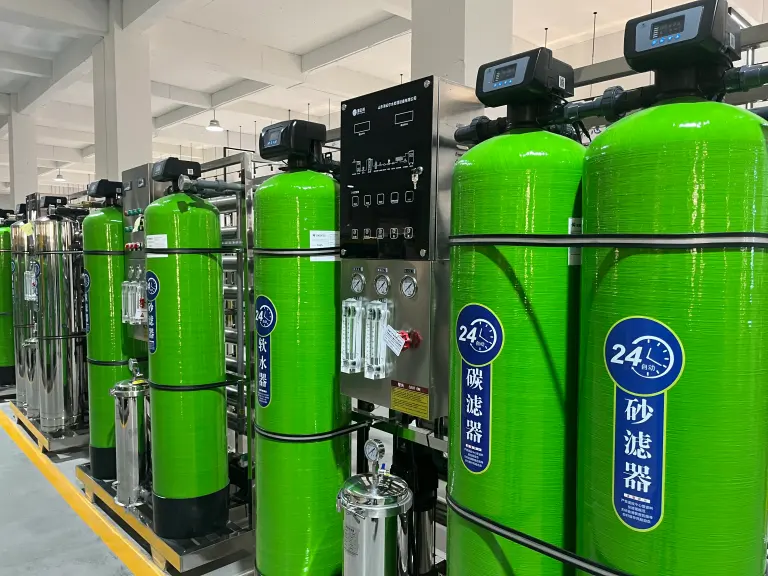
Traditional demineralization systems may use ion exchange resins that require chemical regeneration.
When RO is installed before ion exchange, it reduces the amount of dissolved salts entering the resin system.
This can reduce regeneration frequency and chemical consumption, depending on system design and operating conditions.
RO can therefore improve the efficiency of combined water purification systems.
Monitoring System Performance
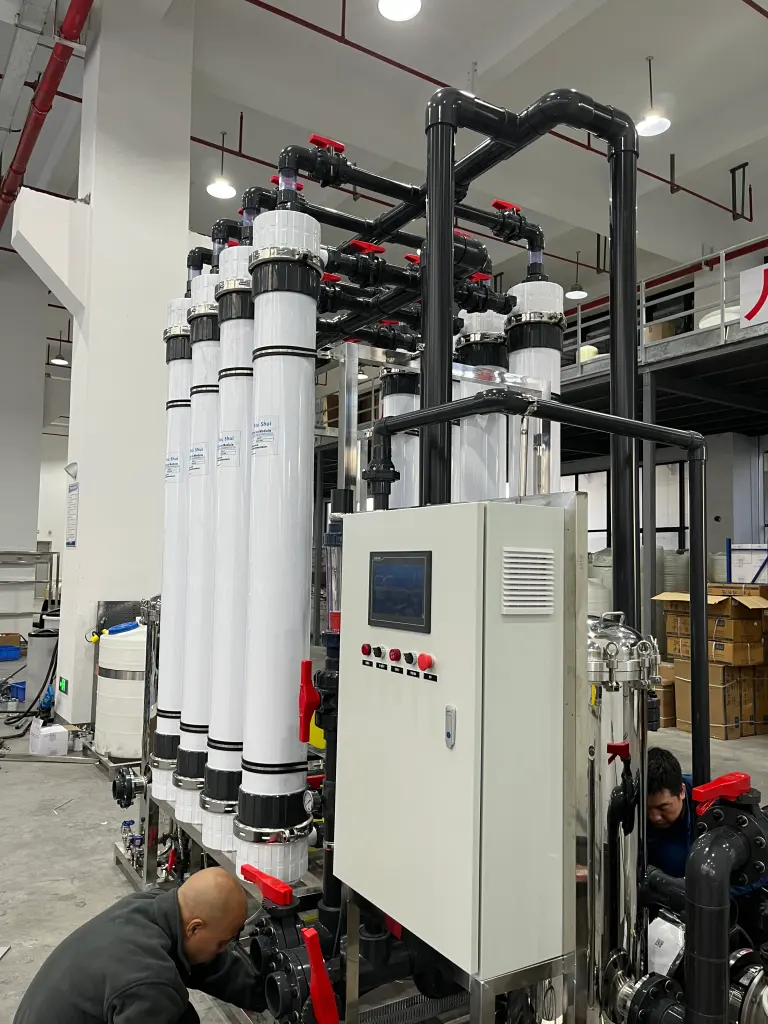
Industrial RO systems require continuous monitoring to maintain reliable operation.
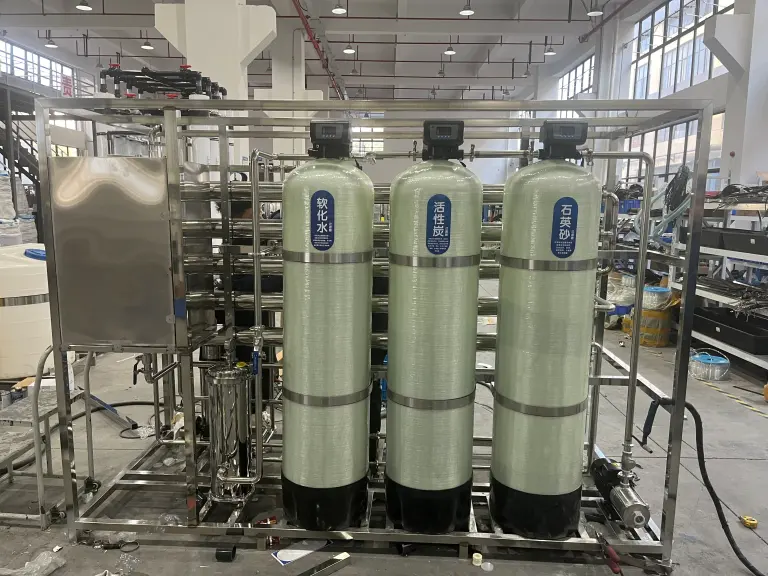
Important parameters include feedwater pressure, permeate flow, concentrate flow, conductivity, temperature, and membrane pressure drop.
Conductivity monitoring helps operators evaluate dissolved ionic contamination in treated water.
Changes in these parameters can indicate membrane fouling, scaling, or other operating problems.
Maintenance and Reliability
Proper maintenance is essential for power plant RO systems.
Pretreatment equipment must be inspected regularly, and membrane cleaning should be performed when operating conditions indicate significant fouling or scaling.
Preventive maintenance helps reduce unexpected shutdowns and supports reliable water production.
Economic Benefits
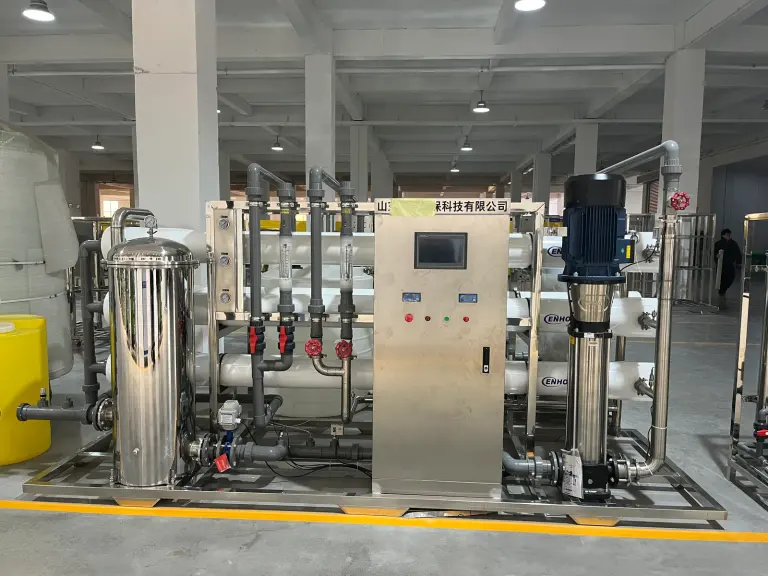
RO systems require electricity, membrane replacement, and maintenance. However, they may reduce the load on downstream purification equipment.
Improved water treatment can help control boiler scaling and reduce some maintenance requirements.
The overall economic benefit depends on water quality, plant capacity, energy costs, and system design.
Conclusion
Reverse osmosis is an important technology for water treatment in thermal power plants.
Its main applications include boiler feedwater pretreatment, cooling water treatment, and integration with demineralization systems.
With proper pretreatment, monitoring, and maintenance, RO systems can improve water treatment reliability and support efficient power plant operation.
As power plants seek to improve resource efficiency, RO technology will continue to be an important part of industrial water purification.
Need an engineered recommendation?
Send your feed-water analysis and operating target to our engineering team.
Chat on WhatsApp